Lab · Physics
Gravity and orbits
Launch a satellite, follow the planets, rediscover Kepler’s laws.
- A simulation bench
- Chapters
- A guided tour
- Challenges
The short answer
Why doesn’t the Moon fall onto the Earth?
In fact, it does fall: the Earth pulls on it just as it pulls on an apple, and a single law, Newton’s, explains both. But the Moon is also moving sideways very fast: as it falls, it moves on, and its path curves around the Earth without ever touching it. Without gravity, it would go straight on.
With the Family plan
- They understand what they see in class. Every maths and science idea becomes an experiment they get their hands on.
- They get going on their own. A hint when they get it wrong, the solution only after three tries.
- You see what they did. Mission by mission, in your parent space.
No bank card. Afterwards: €6.90 a month, no commitment · or €49 a year
Cancel online at any time, effective at the end of the paid month. Terms of sale
- Your account
- Your e-mail confirmed
- The course, straight away
The plan opens every course: 247 workshops, 117 modules and 49 labs, from age 9 to university level.
See the plans →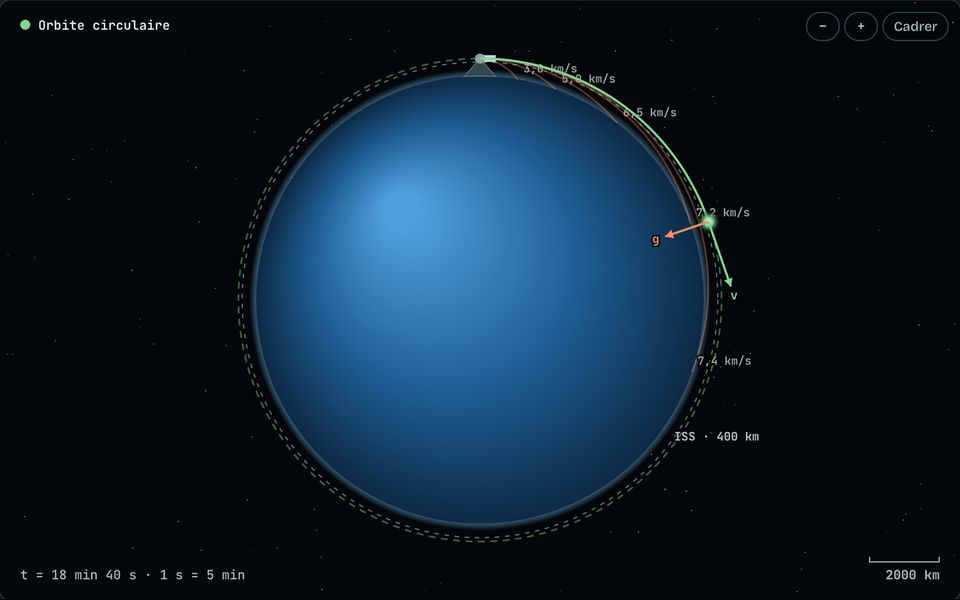
Already have an account? Sign in
Teacher? A free 2-month trial for your class. Write to us
- Card payment, on Stripe’s secure page
- No ads, no data sold
- Data stored in France